SEO & Growth
AI for Ecommerce SEO: Turning Supplier Copy Into Listings That Rank and Convert

AI for ecommerce SEO
Search visibility for product pages depends on clear intent, unique value, and consistent structure—not on stuffing keywords into a wall of text. Supplier-provided descriptions often fail all three: they repeat manufacturer blurbs, omit buyer language, and ignore how your catalog segments products.
Merchants know they should improve copy. They also know they cannot hand-edit five hundred SKUs every quarter. That gap is where AI-assisted catalog optimization belongs—not as a black box replacement for judgment, but as leverage on repetitive work.
Why supplier copy hurts SEO and conversion
Duplicate manufacturer descriptions create duplicate content risk across the web and weaken differentiation. Thin bullets miss questions shoppers actually ask. Missing or weak titles reduce click-through from search results even when you rank.
The fix is not “more AI words.” It is structured optimization:
Titles aligned to how people search and how you brand
Descriptions that answer objections and clarify variants
Meta and product-type patterns that scale across categories
Brand voice still matters, especially at scale
Effective optimization tools let you steer tone and constraints so output feels like your store, not a generic template. The workflow that works in practice pairs machine scale with human approval: preview changes, accept what fits, edit edge cases.
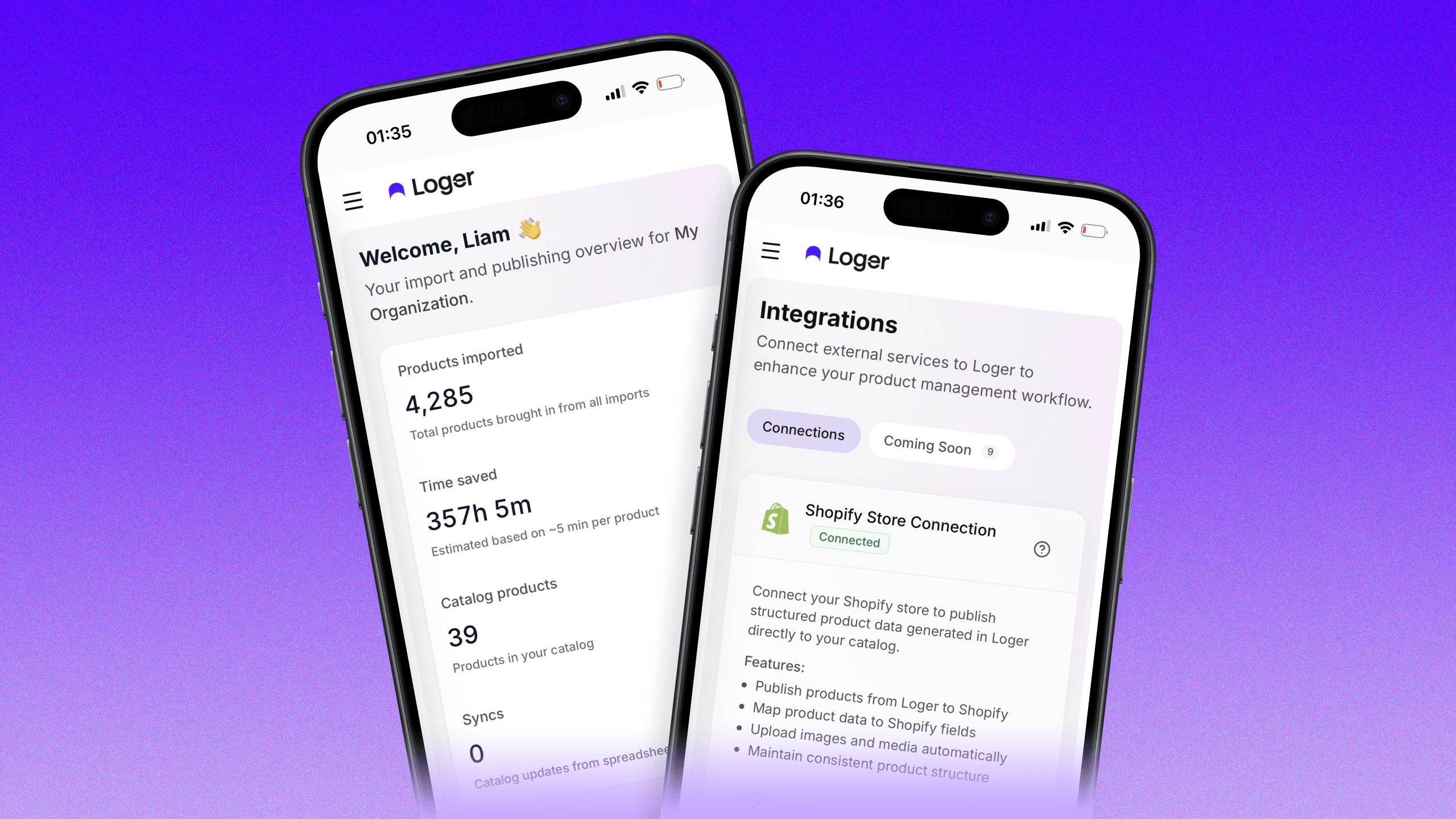
Loger includes catalog optimization aimed at ecommerce realities—titles, descriptions, meta tags, and product types—so SEO improvements ride on top of a normalized catalog rather than one-off documents.
Measuring success
Look beyond vanity metrics. Useful signals include:
Improved impressions and CTR for priority queries
Higher on-page engagement (time on page, add-to-cart rate)
Fewer support questions about sizing, compatibility, or what is included
SEO and conversion move together when listings communicate clearly.
Takeaway
Supplier copy is a starting point, not a finish line. AI-powered optimization is valuable when it is grounded in your catalog, governed by brand rules, and reviewable before publish. That is how you scale SEO-quality listings without scaling spreadsheet burnout.