Getting Started
From Supplier Chaos to Sellable Listings: Why Messy Product Data Costs You Sales

From supplier chaos to sellable listings
If you sell online, you already know the pattern. A supplier emails a spreadsheet with columns named differently than last month. Another shares a Google Drive folder where the “product name” is buried in a filename. A CSV arrives with variants split across rows in a way your platform will never accept.
None of this is malicious. Suppliers optimize for their operations, not yours. The pain lands on your team: hours of reformatting, typo-prone copy-paste, and listings that go live with weak titles or missing images—after you have already paid for ads or committed to a launch date.
The real problem is not “bad files”—it is missing catalog infrastructure
Spreadsheets and folders are not a catalog. A catalog is a single structured source of truth: SKUs, variants, pricing, images, and copy that you can trust before anything hits a storefront.
Without that layer, every batch of supplier data forces the same manual pipeline:
Open the file and guess which column is “price” this time
Normalize SKUs so you do not create duplicates
Rewrite titles and descriptions so they match your brand and search intent
Re-enter everything again for a second store or marketplace
That work does not scale. It also does not compound—next week’s file starts the cycle over.
What “solved” looks like for growing merchants
The outcome merchants need is straightforward even when the inputs are not:
Structured extraction from raw supplier assets (folders, CSVs, mixed files) into consistent product records
Review before publish, so humans stay in control without doing data entry from scratch
One path to multiple storefronts, so Shopify, WooCommerce, and other channels stay aligned
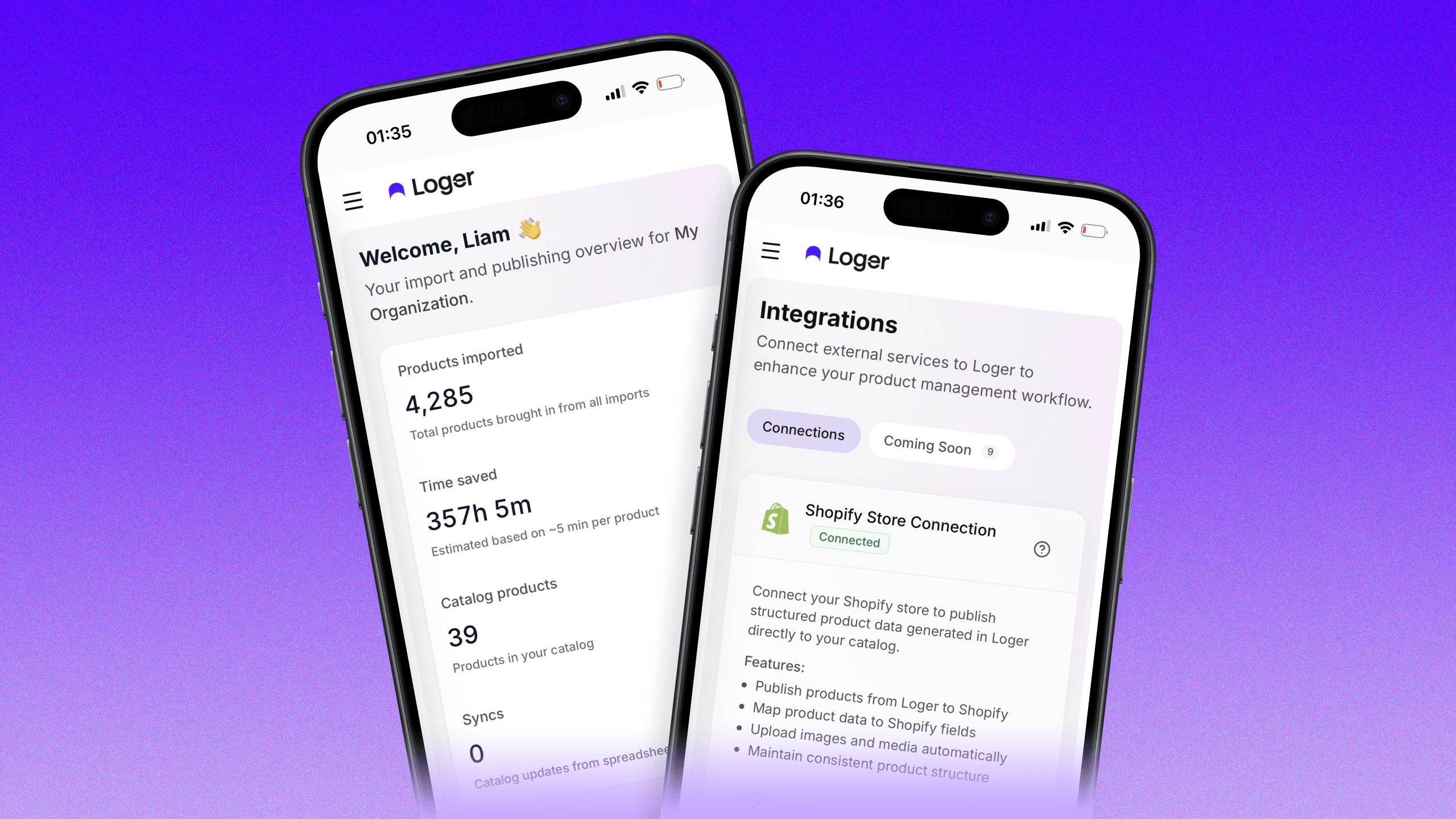
That is the gap Loger is built for: ecommerce catalog infrastructure between supplier reality and your live stores—not a one-off uploader, but a repeatable workflow.
Why this matters for SEO and conversion
Search engines and shoppers both reward clarity. Thin, duplicated, or inconsistent listings dilute relevance signals and increase bounce rates. When product data is normalized before publish, you can apply consistent naming, meta patterns, and variant logic—so every channel benefits from the same strong foundation.
Takeaway
If supplier data feels like a recurring emergency, the fix is rarely “more discipline in Excel.” It is a system that accepts messy input, produces structured output, and connects to the platforms you already sell on. That is how you turn supplier chaos into sellable listings—and protect margin while you grow.